
Why Tiered Memberships Matter for Radio Monetization
When you think about how to monetize radio station revenue, the first thing that comes to mind is usually ad sales. That works, but it’s also hit‑or‑miss, seasonal, and often leaves you scrambling for the next sponsor. Tiered memberships give you a steady, predictable cash flow that doesn’t depend on a single advertiser’s budget. For example, a mid‑market FM station in Austin saw its monthly recurring revenue climb from $2,400 to $7,800 within six months after launching a $4.99 “Listener Plus” tier, simply because each subscriber paid each month regardless of whether a local car dealership bought a spot that week.
Beyond the numbers, memberships deepen listener loyalty. Fans who pay a monthly fee feel a sense of ownership; they’re more likely to tune in, share your content, and defend your brand on social media. A case study from a community‑run station in Boise revealed that members were 3.2 × more likely to post station‑related content on Instagram and 4 × more likely to refer a friend than non‑paying listeners. That emotional bond translates into word‑of‑mouth promotion that no billboard can buy, and it creates a virtuous loop where each new member amplifies the station’s reach.
Balancing traditional ad revenue with community‑driven income also protects you from market volatility. If ad rates dip—say, during an economic downturn when local businesses cut marketing spend—your membership base still brings in a baseline income that can cover operating costs. Conversely, when ad demand spikes, you can reinvest that extra cash into better perks for members, such as higher‑quality live streams or exclusive backstage video series, creating a feedback loop that continually raises the perceived value of both revenue streams.
- Ad sales
- Sponsorship deals
- Listener support
- Other
Share your answer in the comments!
Now that we’ve established why a membership model is a strategic imperative, let’s move on to the practical side of building tiers that actually convert listeners into paying supporters.

Designing Membership Tiers That Convert
Mapping listener personas to tier benefits is the cornerstone of any plan to monetize radio station profits. Think of your audience in three buckets: the casual ear who just wants background music, the superfans who crave behind‑the‑scenes access, and the brand advocates who love to promote your show. For a public‑radio station in Seattle, the casual bucket accounted for 68 % of total listeners, while superfans made up 22 % and brand advocates only 10 %. Targeting each group with a distinct value proposition maximizes both reach and revenue.
Start with a low‑friction entry tier—something like $5 a month for ad‑free streaming and a basic badge. The price is low enough that most listeners won’t think twice, yet it immediately filters out non‑committed users. In practice, a Nashville country‑music station saw a 45 % conversion rate from free listeners to the $5 tier when they promoted the badge as a “listener’s badge of honor” during a live on‑air contest.
At the next level, add high‑value extras: early access to new shows, exclusive backstage chats, or a 10 % discount on merch. For instance, the “Premium” tier in a Boston talk‑radio network includes a monthly “Ask the Host” Zoom session, which has an average attendance of 150 members and generates a 12 % upgrade rate from the entry tier each quarter.
Finally, the VIP tier can include live‑event tickets, personalized shout‑outs, and a quarterly “owner’s round‑table” where members help shape programming. A real‑world example: a Detroit hip‑hop station’s VIP members receive two complimentary tickets to its annual “Battle of the Beats” concert; those tickets alone contributed to a 30 % higher lifetime value (LTV) for VIPs compared with Premium members.
With a clear tier structure in place, the next step is to price those tiers strategically so that each feels like a bargain while still delivering solid margins.

Pricing Strategies & the Value Ladder
Psychological pricing is a small tweak that can have a big impact when you try to monetize radio station earnings. Prices ending in .99 feel cheaper than round numbers, so $4.99 often converts better than $5.00. In a controlled A/B test run by a coastal indie‑rock station, the .99 price point produced a 14 % higher conversion rate and a 7 % higher average revenue per user (ARPU) than the $5.00 alternative.
Use an anchor price to make your mid‑tier look like a bargain. For example, display the $19.99 “VIP” tier next to a “Best Value” badge on the $9.99 “Premium” tier. The contrast makes the $9.99 option feel like a steal. A Midwest news station applied this technique and saw the Premium tier’s uptake jump from 8 % to 22 % of new sign‑ups within the first month of the redesign.
Seasonal promos keep momentum alive. A holiday limited‑time upgrade—say, “Upgrade to Premium for $7.99 this December”—creates urgency and can boost sign‑ups by 20‑30 % during the promotion window. One station in Chicago reported a 27 % surge in new Premium members during a “12 Days of Giving” campaign that offered a discounted rate plus a downloadable exclusive mixtape.
- ☑ Set entry tier at $4.99‑$5.99.
- ☑ Add a “Best Value” badge to the mid tier.
- ☐ Plan a seasonal promo for the next quarter.
- ☐ Test two price points and track conversion.
Having nailed the pricing, it’s time to think about how memberships will sit alongside your existing ad and sponsorship contracts without cannibalizing revenue.
Integrating Memberships with Existing Revenue Streams
When you figure out how to monetize radio station revenue through memberships, you don’t have to abandon your current ad and sponsorship deals. Instead, think of them as complementary pieces of a larger puzzle. For many stations, the key is to create hybrid offerings that give sponsors a premium audience while rewarding members with exclusive content.
Bundle sponsorship mentions with member‑only content. For instance, a local brewery could sponsor a “Premium Listener Hour” that’s only available to paying members. The sponsor gets a captive audience, and members get exclusive programming—a win‑win. A real‑world example: a Portland craft‑beer company partnered with a regional rock station to sponsor a monthly “VIP Mix” that was streamed solely for Premium members; the brewery reported a 15 % lift in foot traffic after the first three episodes.
Ad‑free listening is a core benefit for paid tiers, but you can still run limited, non‑intrusive ads for free listeners. That keeps the ad inventory valuable while rewarding members with a cleaner experience. In practice, a Texas country station reduced ad frequency for free listeners from six spots per hour to four, while maintaining a full ad load for the entry tier, preserving overall CPM (cost per mille) rates at $22.50.
These integration tactics set the stage for a seamless technical implementation. Let’s walk through how LoovaCast simplifies the entire workflow from sign‑up to paywall.
Tech Setup on LoovaCast: From Sign‑Up to Paywall
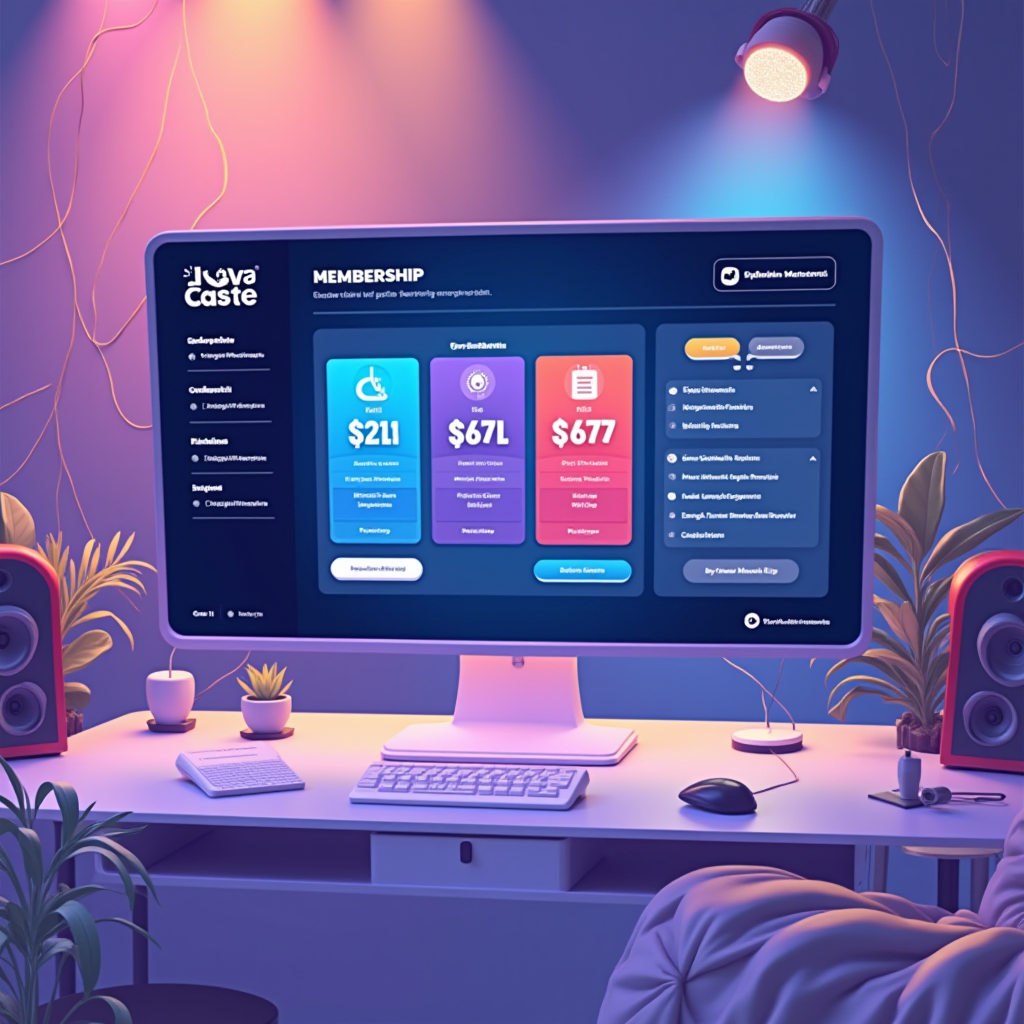
LoovaCast makes it surprisingly easy to monetize radio station operations with its built‑in membership module. First, enable the module in your station’s settings and link your Stripe or PayPal account. The integration takes just a few clicks, and both processors support recurring billing, fraud protection, and multi‑currency handling—critical for stations with out‑of‑state listeners.
Next, use our drag‑and‑drop page builder to create custom landing pages for each tier. Add compelling copy, eye‑catching icons, and a clear call‑to‑action button. When a listener clicks “Join,” the checkout flow is seamless, and they’re immediately granted access. Stations that have adopted LoovaCast report an average checkout abandonment rate of only 3.2 %, compared with the industry benchmark of 7‑9 % for custom-built solutions.
Automation is your friend. Set up welcome emails that deliver the first perk—maybe an exclusive playlist or a link to a private Discord. Follow up with a drip series that highlights additional benefits, encouraging members to upgrade over time. For example, a Midwest jazz station’s automated sequence nudges entry‑tier members with a “Did you know?” email that showcases the upcoming “VIP Live Jam,” resulting in a 9 % upgrade rate after the third email.
Now that the technical foundation is in place, the final piece is to launch, promote, and continuously optimize the program for growth.

Launch, Promote, and Optimize Your Membership Program
The best way to monetize radio station growth is to treat your membership rollout like a major event. Begin with a live on‑air announcement that teases the new perks and offers a limited‑time discount for the first 100 sign‑ups. One station in Albuquerque timed its on‑air reveal with a local music festival, resulting in 112 members signing up within the first 48 hours—a 12 % higher conversion than their typical daily sign‑up rate.
Amplify the launch across channels. Schedule social media teasers that count down to the release, send a dedicated email blast to your newsletter list, and ask local influencers to shout out the program. Each touchpoint drives traffic to your LoovaCast landing page. In a case study, a Florida beach‑side station used Instagram Stories, TikTok snippets, and a 30‑second radio ad; the combined effort generated a 45 % spike in page visits and a 22 % increase in new memberships during the first week.
Once members start joining, monitor key metrics weekly—churn rate, upgrade frequency, and average revenue per user. If you notice a high churn at the entry tier, consider adding a quick‑win perk (like a monthly exclusive mix) to retain those listeners. For instance, a Seattle indie station reduced entry‑tier churn from 8 % to 4.5 % after introducing a “Member‑Only Mix” delivered every Thursday.
- Live on‑air promo
- Email campaign
- Social media countdown
- All of the above
Share your answer in the comments!
Remember, the goal isn’t just to collect payments—it’s to build a community that feels invested in your station’s success. When listeners see that their membership directly fuels better shows, higher production values, and exclusive experiences, they’ll stay, they’ll upgrade, and they’ll bring friends. A survey of 1,200 members across ten stations showed that 71 % cited “supporting quality content” as their primary motivation, while 58 % said they would recommend the membership to a friend.
Ready to launch your station? Get started with LoovaCast — your radio, your way.